

Kawagoe Day Trip from Tokyo
Plan a Kawagoe day trip from Tokyo: the Kurazukuri warehouse street, the Toki no Kane bell tower, Candy Alley sweets, Hikawa Shrine, simple Tobu, Seibu and JR access, and how to dodge the crowds.
Photo: Syohei Arai / Wikimedia Commons · CC BY-SA 4.0
- ✓Kawagoe 川越 is the easiest taste of old Edo near Tokyo — a half-day castle town of clay-walled warehouses about 30–60 minutes out, depending on which line and train type you take.
- ✓The set-piece is the Kurazukuri 蔵造り street: a row of black-plastered Edo-era merchant warehouses topped by the Toki no Kane 時の鐘 ("Time Bell"), the town's wooden bell tower and unofficial symbol.
- ✓Three rail options reach it — Tobu Tōjō from Ikebukuro (usually fastest), Seibu Shinjuku to Hon-Kawagoe (closest to the old streets), and JR from Shinjuku via the Kawagoe Line — so pick by your Tokyo base.
- ✓Kashiya Yokochō 菓子屋横丁 ("Candy Alley") is a short lane of old-fashioned sweet shops; with Candy Alley, sweet-potato treats and street snacks, Kawagoe is a genuinely kid-friendly outing.
- ✓It is busiest on weekends and holidays and quietest on weekday mornings — arrive early and you can have the warehouse street almost to yourself before the tour groups.
- ✓Half a day is plenty for the core sights, leaving the afternoon for a Tokyo neighborhood; flat, walkable streets make it an easy add-on rather than a full-day commitment.
Why Kawagoe makes such an easy day trip
If you want a sense of old Edo without the longer haul to Nikkō or Kamakura, Kawagoe 川越 is the obvious answer. Nicknamed Koedo 小江戸 — "Little Edo" — this Saitama castle town kept its merchant-quarter streetscape when much of Tokyo's was lost to fire, earthquake and war, so a short ride north drops you among black-plastered storehouses, a wooden bell tower and lanes of old sweet shops. It is close, flat, walkable and forgiving: the kind of trip you can fold into a Tokyo itinerary on a half-day rather than building a whole expedition around.
The town rewards a wander more than a checklist. The pleasure is in drifting along the Kurazukuri street, ducking into Candy Alley, climbing up to a shrine and grazing on sweet-potato snacks — Kawagoe's local specialty — between the warehouses. For a deeper dive into Tokyo's surviving old quarters, pair it in your mind with the city's own historic pockets; here, though, the appeal is simply that an entire Edo-era streetscape has been preserved in one compact, easy-to-reach place.


Getting there: which line to take
Three private and JR lines reach Kawagoe, and the right one depends on where you are staying. From Ikebukuro, the Tobu Tōjō Line is usually the quickest, with rapid and express trains to Kawagoe Station; it is the default for most visitors. From Shinjuku, the Seibu Shinjuku Line runs to Hon-Kawagoe Station, which is actually the closest of the three stations to the old streets — handy if you would rather walk less. JR also runs from Shinjuku via the Saikyō and Kawagoe lines to Kawagoe Station, which is the option to use if you are leaning on a JR pass.
Two stations, two short walks: Kawagoe and Kawagoe-shi stations sit south of the historic core, a 15–20 minute walk or a short local bus from the warehouse street, while Hon-Kawagoe is a little closer. A loop bus links the stations with the main sights for anyone who would rather not walk both ways. Tobu and Seibu both sell discount day passes that bundle the return train with local buses; whether one pays off depends on how much you will use the bus, so check the current coverage and price before you buy.
Exact fares, train types and timetables change, so confirm them on the day — but as evergreen guidance, reckon on roughly 30 minutes by the faster Tobu or Seibu trains and a little more on the all-stations services. It is close enough that you do not need to rush the first train; a relaxed mid-morning departure still leaves a full afternoon.
- Tobu Tōjō Line from Ikebukuro → Kawagoe Station — usually the fastest; take a rapid/express, not the local.
- Seibu Shinjuku Line from Shinjuku → Hon-Kawagoe Station — closest station to the old streets.
- JR from Shinjuku (Saikyō / Kawagoe lines) → Kawagoe Station — the choice if you hold a JR pass.
- A loop bus connects the stations with the warehouse street; Tobu and Seibu day passes can bundle train + bus — verify coverage and price.
- Verify fares, train types and times before you travel; rough rule of thumb is about 30 minutes on the faster trains.

What to see in the Little Edo core
The heart of Kawagoe is the Kurazukuri 蔵造り street, a stretch of two-storey kura (clay-walled, fire-resistant merchant warehouses) finished in heavy black plaster, with deep eaves and thick wooden doors. Many still trade as shops and cafés, so you can browse Edo-era buildings rather than just photograph them. Rising over the rooftops is the Toki no Kane 時の鐘, the "Time Bell" — a wooden tower rebuilt several times over the centuries that still rings out the hours and is the town's defining image.
A short walk away, Kashiya Yokochō 菓子屋横丁 — "Candy Alley" — is a cobbled lane of old-style sweet shops selling dagashi (cheap retro candy), rice crackers, and Kawagoe's beloved sweet-potato (satsumaimo さつまいも) treats, from soft-serve to chips and senbei. It is short and often busy, but it is a delight with children. Nearby, Kawagoe Hikawa Shrine 川越氷川神社 draws couples and families for its romance and matchmaking associations and is known for a summer wind-chime display; treat any seasonal installation as something to verify before you visit, since dates vary year to year.
Round it out with whatever suits your group: the Honmaru Goten, the surviving palace hall of Kawagoe Castle; Kita-in temple, with its hall of hundreds of stone rakan statues; and the Taishō-roman Yume-dōri, a short street of early-20th-century Western-style shopfronts that makes a nice contrast to the Edo warehouses. None of these needs more than a quick visit, which is why half a day covers the town comfortably.

- Kurazukuri street — black clay-walled Edo warehouses, many still open as shops and cafés.
- Toki no Kane 時の鐘 — the wooden "Time Bell" tower, the town's symbol.
- Kashiya Yokochō ("Candy Alley") — retro sweets, dagashi and sweet-potato snacks; great with kids.
- Kawagoe Hikawa Shrine — romance/matchmaking shrine; seasonal wind-chime display (verify dates).
- Add-ons: Honmaru Goten castle hall, Kita-in temple's stone rakan, the Taishō-roman shopfront street.

When to go and how to time the crowds
Kawagoe's one real catch is its popularity. The warehouse street and Candy Alley fill quickly on weekends, public holidays and during the big Kawagoe Festival in autumn — a highlight famous for its towering wheeled floats, usually held on the third weekend of October but confirm the year's schedule before planning around it. On a busy afternoon the lanes can feel shoulder-to-shoulder. The fix is simple: come on a weekday if you can, and arrive in the morning. Early, the Kurazukuri street is calm enough to enjoy the architecture and take an unhurried photo before the tour groups arrive.
Any season works, since the draw is streets rather than blossoms, but autumn is especially pleasant for the festival and the cooler walking weather. Pick which day-trip suits which season using our season round-up, and keep an eye on the forecast — Kawagoe is almost all outdoors, so a wet day is less rewarding. Because the core is so compact, it also pairs neatly with a Tokyo afternoon: see Little Edo by lunchtime, then head back into the city.


Kawagoe at a glance
Use this quick card to plan a Kawagoe half-day. The character of the town — the Little Edo warehouse street, the bell tower, Candy Alley and the simple rail access — is evergreen; volatile details (exact fares, train types, timetables, festival and seasonal-display dates, pass prices) change, so verify them before you go.
- Core sights: Kurazukuri street, Toki no Kane bell tower, Kashiya Yokochō, Hikawa Shrine.

Nihonbashi & Ningyōchō Old Tokyo
The merchant heart of old Edo: Nihonbashi's historic bridge and centuries-old shops, and neighbouring Ningyōchō's lantern-lit lanes, Suitengū shrine, Amazake Yokochō sweets, and unhurried shitamachi mood — a calm, walkable slice of traditional Tokyo.
Read guide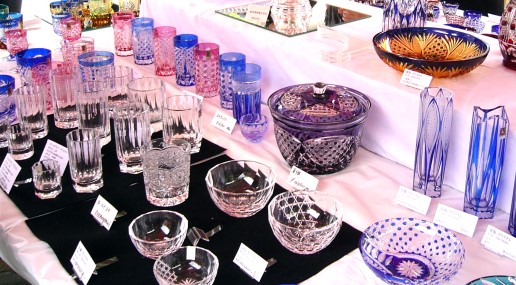
Traditional Crafts in Tokyo
How to find Tokyo's traditional crafts — Edo kiriko cut glass, washi paper, indigo dyeing, hand-forged knives, woodwork and brushes — whether you want to buy a keepsake or make one yourself, organised by craft and by the neighbourhoods where the workshops cluster.
Read guide
Tokyo Day Trips by Season
Choose Tokyo day trips by season: sakura and shibazakura in spring, hydrangeas and water in early summer, kōyō in autumn, and the clearest Fuji odds, illuminations and night festivals in winter — with the timing kept honest.
Read guideMore in Day Trips
6
Best Onsen Day Trips from Tokyo
Onsen day trips and overnights from Tokyo: Hakone, Kusatsu, the Izu and Atami coast, Chichibu and more — sorted by travel time, day-use vs overnight, tattoo policy, private baths, and season.
Read guide
Chichibu Day Trip from Tokyo
Plan a Chichibu day trip from Tokyo: Seibu limited-express access, Chichibu Shrine and the famous night festival, the Hitsujiyama shibazakura (verify season), mountains and gorges, and day-trip vs overnight.
Read guide
Enoshima Day Trip from Tokyo
Plan Enoshima from Tokyo: the island climb past Enoshima Jinja, the Samuel Cocking Garden and Sea Candle tower, the Iwaya sea caves, shirasu lunches, sunset over Sagami Bay, the Enoden link, and how to pair it with Kamakura.
Read guide
Hakone Day Trip from Tokyo
How to do Hakone as a day trip from Tokyo: Odakyū from Shinjuku (fastest on the Romancecar), the classic scenic loop of mountain railway, cable car, Ōwakudani ropeway and Lake Ashi boat, plus onsen, the Open-Air Museum, Fuji-view chances, Free Pass logic and timing.
Read guide
Kamakura Day Trip from Tokyo
A Kamakura day trip from Tokyo: the Great Buddha and Hase-dera, Tsurugaoka Hachimangū, the seaside Enoden line, the cafés and hiking trails of Kita-Kamakura, hydrangea-season timing, and when to add Enoshima.
Read guide
Mt Fuji Day Trip from Tokyo
How to actually see Mt Fuji from Tokyo: why Fuji is a view and a region rather than a single day-sight, the realistic options (Kawaguchiko, Hakone, day tours), honest visibility and weather odds, the separate summer climbing season, and how to plan a day that works.
Read guide