
Traditional Crafts in Tokyo
How to find Tokyo's traditional crafts — Edo kiriko cut glass, washi paper, indigo dyeing, hand-forged knives, woodwork and brushes — whether you want to buy a keepsake or make one yourself, organised by craft and by the neighbourhoods where the workshops cluster.
Photo: TCK-hp / Wikimedia Commons · CC BY-SA 3.0
- ✓Tokyo's living crafts trace back to the artisans of Edo — Edo kiriko (江戸切子, cut glass), Edo komon (江戸小紋, fine stencil dyeing), washi (和紙, handmade paper), woodwork, brushes and hand-forged knives all still made and sold in the city.
- ✓Two neighbourhoods make the best craft bases: Asakusa with its Nakamise lane and the Kappabashi 合羽橋 kitchenware street, and the older-trade quarters of Nihonbashi and Ningyōchō.
- ✓You can buy a finished piece or make one yourself — many studios run short hands-on workshops in Edo kiriko cutting, indigo dyeing, washi paper or sweets-making, several with English support.
- ✓For an overview under one roof, head to a traditional-crafts centre such as the one in Asakusa, where many Tokyo crafts (Edo-mokko woodwork, kiriko, dyeing, dolls) are shown and sold together.
- ✓Crafts make the most meaningful Tokyo souvenirs: a single Edo kiriko glass, a sheet of washi, a tenugui (手ぬぐい) hand towel or a good kitchen knife travels home far better than mass-market trinkets.
- ✓Workshop prices, booking systems, opening days and English availability all change — book hands-on classes ahead and verify each studio's current details before you go.
Edo's crafts, still made in the city
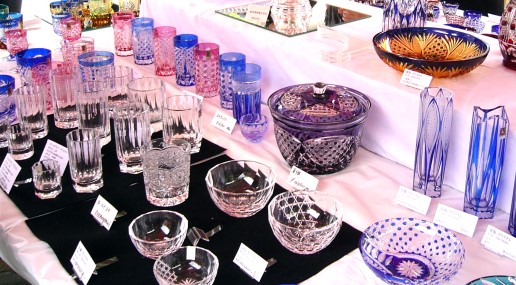
Tokyo was Edo for two and a half centuries, and the capital of the shogun drew artisans from across Japan to supply its samurai, merchants and townspeople. Many of those trades never left. What travellers think of as 'traditional Japanese crafts' are, in Tokyo, often specifically Edo crafts — refined, slightly understated, made for a dense city of discerning customers. Several still carry the Edo name: Edo kiriko (江戸切子), the deeply cut, faceted glass that catches light like a jewel; Edo komon (江戸小紋), kimono cloth dyed through paper stencils in patterns so fine they read as a solid colour from across a room; Edo sashimono, precise joined woodwork made without nails. Alongside them sit crafts found across the country but very much alive here — washi (和紙, handmade paper), aizome (藍染め, indigo dyeing), hand-forged knives, calligraphy brushes, lacquerware and the dolls of Ningyōchō, the 'doll district'.

The pleasure of seeking these out is partly the objects and partly the city they reveal. Following crafts pulls you off the neon avenues and into the low-rise, workshop-lined backstreets of old Tokyo — the same downtown shitamachi (下町) world of temples, sentō and family-run shops. You can treat it as shopping, as a half-day cultural walk, or as a hands-on workshop where you leave with something you made. This guide sorts the subject two ways: by craft, so you know what to look for, and by neighbourhood, so you can plan a real route through the parts of town where the studios still cluster.


The crafts worth seeking out
A short field guide to what you are likely to encounter, and what makes each worth carrying home. Edo kiriko (江戸切子) is the headline: hand-cut glass, usually a coloured layer over clear, ground into fans, hemp-leaf, basket-weave and chrysanthemum patterns. A single tumbler or sake cup is a genuine heirloom, and several studios let you try the cutting wheel yourself. Washi (和紙) — handmade paper — appears as letter sets, notebooks, fans, lamp shades and origami; it is light, flat and almost indestructible in a suitcase. Indigo dyeing (藍染め, aizome) gives the deep blue of tenugui hand towels, scarves and noren curtains; dye-your-own workshops are common and very forgiving for beginners.

Then there is the metal and wood. Tokyo's kitchen-knife shops — concentrated on Kappabashi 合羽橋 'kitchen town' and at long-established Nihonbashi cutlers — sell hand-forged blades that professional chefs come for, and most will sharpen, engrave and explain the steel before you buy. Edo-mokko and sashimono woodwork, lacquer chopsticks and trays, calligraphy and make-up brushes (the famous fude), tenugui and furoshiki (風呂敷, wrapping cloths), and the seasonal dolls of Ningyōchō round out the list. None of this is cheap tourist tat: these are working trades, and the price reflects the hours of hand-work — which is exactly why a small, well-chosen piece outshines a shelf of mass-produced souvenirs.
- Edo kiriko (江戸切子): hand-cut faceted glass — tumblers and sake cups; cutting workshops available.
- Washi (和紙): handmade paper — stationery, fans, lamps; the easiest craft to pack and gift.
- Aizome (藍染め): indigo dyeing — tenugui towels, scarves, noren; beginner-friendly dye-your-own classes.
- Hand-forged knives: chef-grade blades on Kappabashi and at Nihonbashi cutlers, with sharpening and engraving.
- Woodwork, lacquer, brushes, dolls: Edo sashimono joinery, fude brushes, and the Ningyōchō doll trade.

Map pins
Asakusa & Kappabashi: the craft heartland
If you have time for only one craft district, make it Asakusa and the Kappabashi street just behind it. Asakusa is old Tokyo at its most concentrated — the great temple of Sensō-ji, the souvenir-lined Nakamise lane, and a grid of backstreets full of small makers and old shops. The Nakamise approach itself sells crafty things (fans, combs, tenugui, sweets), but the better finds are in the quieter side streets and at the dedicated traditional-crafts centre near the temple, where many Tokyo crafts are gathered and demonstrated under one roof. Treat Asakusa as a walk: temple first, then the lanes, with workshop stops worked in.
A few minutes west, Kappabashi 合羽橋 'kitchen town' is a long street of restaurant-supply shops that has become a craft destination in its own right. It is the place for hand-forged knives, ceramics, lacquer, and — famously — the hyper-realistic plastic food samples (食品サンプル) you see in restaurant windows, which make a wonderfully odd souvenir. The street's specialists will talk you through knife steel and sharpening, and several run sample-making workshops. Asakusa and Kappabashi sit within an easy walk of each other, so a single morning can take in the temple, the crafts centre and the kitchen street.

- Asakusa: Sensō-ji, the Nakamise lane and backstreet makers; a traditional-crafts centre gathers many Tokyo crafts in one place.
- Kappabashi 合羽橋: knives, ceramics, lacquer and the famous plastic food samples — and within walking distance of Asakusa.
- Best done as a walk: temple, side lanes, crafts centre, then the kitchen street.
 Asakusa Old Tokyo Walk
A self-guided Asakusa route linking Sensō-ji, the side streets, crafts and snacks — the natural frame for a craft morning.
 Asakusa Neighbourhood Guide
How to spend a day in Asakusa, with food, the river and where the craft shops sit.
Sensō-ji Temple GuideThe temple at the heart of the district — gates, Nakamise and etiquette before you browse the lanes.
Nihonbashi, Ningyōchō & Yanaka: older trades and quiet lanes
Tokyo's other craft strongholds reward a slower, more grown-up wander. Nihonbashi was Edo's mercantile heart — the bridge from which all road distances in Japan were once measured — and its long-established shops still sell knives, paper, brushes, lacquer and traditional sweets, several in business for centuries. Neighbouring Ningyōchō (人形町), literally 'doll town', kept the trades that supplied the old theatre district: dolls, combs, fans and small craft goods, sold along an atmospheric main street of sweet shops and shrines. Pairing the two makes a refined craft-and-history walk, with old-Tokyo lunch stops built in.

For something more bohemian, the Yanaka–Nezu–Sendagi area (the 'Yanesen' shitamachi) keeps small studios, potters, paper shops and craft-minded cafés among temple lanes that survived the wars and the bubble largely intact. It is less about flagship shops and more about stumbling on a single maker's workspace. Wherever you go, the etiquette is the same low-key courtesy of a working shop: ask before photographing inside, handle pieces gently, and remember that the maker behind the counter often made the thing in your hand.
- Nihonbashi: Edo's merchant centre — centuries-old shops for knives, paper, brushes, lacquer and sweets.
- Ningyōchō (人形町, 'doll town'): dolls, combs and fans along an atmospheric main street of sweet shops and shrines.
- Yanaka–Nezu–Sendagi: small studios and potters among quiet temple lanes — craft by serendipity.
- Shop etiquette: ask before photographing inside, handle pieces gently, expect to meet the maker.


Making your own: hands-on craft workshops
The most memorable way to take a craft home is to make it. Tokyo studios run short, beginner-friendly workshops across most of the city's crafts, and a growing number offer English support. The classics for visitors are Edo kiriko cutting (you grind a simple pattern into a glass and keep it), indigo dyeing (you tie, fold and dip a tenugui or scarf and watch it turn blue in the air), washi paper-making, and decorative wagashi (和菓子) sweets-making, where you shape seasonal confections by hand. Most run an hour or two, suit older children as well as adults, and are excellent rainy-day plans because they are entirely indoors.
Two practical notes. First, book ahead: the good workshops are small, English slots fill, and walk-ins are not guaranteed. Second, factor in drying and setting — a dyed cloth or a cut glass may need finishing time, so check whether you take your piece the same day. We deliberately keep specific prices, schedules, languages and booking links out of the prose, because they change constantly; treat the studio's own site or a reputable booking platform as the source of truth, and verify the current details before you commit. A tea ceremony or kimono fitting pairs naturally with a craft workshop for a full day of traditional Tokyo.

- Popular hands-on classes: Edo kiriko glass-cutting, indigo dyeing, washi paper-making, wagashi sweets-making.
- Mostly indoor, an hour or two long, suitable for older kids — strong rainy-day options.
- Book ahead; English slots are limited and fill fast.
- Check finishing/drying time so you know whether you take your piece the same day.
- Verify current prices, schedules and language support on the studio's own channels before you go.
 Tea Ceremony in Tokyo
Pair a craft workshop with a tea ceremony for a full traditional-Tokyo day.
 Kimono Rental in Tokyo
A kimono fitting and a craft class make a natural pairing in Asakusa or the old-town districts.
 Tokyo Rainy-Day Itinerary
Indoor craft workshops slot neatly into a wet-weather plan for Tokyo.
Traditional crafts in Tokyo at a glance
Use this card to plan a craft outing. The crafts themselves and the districts where they cluster are evergreen; the volatile details — individual shop opening days, workshop prices and schedules, English availability, and booking systems — change constantly, so verify them directly with each studio or shop before you go.
- Best craft bases: Asakusa + Kappabashi 合羽橋 (knives, ceramics, crafts centre), and Nihonbashi + Ningyōchō (older trades, dolls, paper).
- Top crafts to seek: Edo kiriko cut glass, washi paper, indigo-dyed tenugui, hand-forged knives, lacquer, brushes.
- Make your own: Edo kiriko cutting, indigo dyeing, washi, and wagashi sweets workshops — book ahead.
- Quiet alternative: small studios and potters around Yanaka–Nezu–Sendagi.
- Souvenir logic: one well-made piece beats a shelf of mass-market trinkets and packs better.
- Verify shop days, workshop prices, schedules and English support directly before you go.

Best Souvenirs from Tokyo
What to buy in Tokyo and where to find it: food gifts and depachika sweets, stationery, crafts and kitchenware, character and pop-culture goods, beauty and skincare, tea and sake, plus airport-safe, packing and customs-smart choices — with links to the depachika, Kappabashi, department stores and craft shops behind each idea.
Read guide
Asakusa Old Tokyo Walk
A self-guided half-day walk through old Asakusa: from the Kaminarimon and Sensō-ji out into the quieter side streets, the craft shops and old kissaten, Kappabashi 'Kitchen Town', and down to the Sumida River with its Skytree views — the shitamachi at walking pace.
Read guide
Nihonbashi & Ningyōchō Old Tokyo
The merchant heart of old Edo: Nihonbashi's historic bridge and centuries-old shops, and neighbouring Ningyōchō's lantern-lit lanes, Suitengū shrine, Amazake Yokochō sweets, and unhurried shitamachi mood — a calm, walkable slice of traditional Tokyo.
Read guideMore in Temples & Old Tokyo
6
Best Temples & Shrines in Tokyo
A curated shortlist of Tokyo's most worthwhile temples and shrines, sorted by area, crowd level, cultural weight and first-timer fit — from the famous big two to the quiet local favourites — so you can pick the two or three that suit your trip.
Read guide
Imperial Palace East Gardens Guide
How to visit the Imperial Palace East Gardens (Kōkyo Higashi-Gyoen) in central Tokyo: the free public grounds of old Edo Castle, the gates and stone ramparts, the donjon base and Honmaru lawn, closed days, Marunouchi and Tokyo Station access, and what each season offers.
Read guide
Jimbōchō Book Town Guide
A guide to Jimbōchō (神保町), Tokyo's used-book district and the world's largest cluster of second-hand and antiquarian bookshops — how to browse it, its publishing history, its famous curry and old kissaten cafés, the book fair, the stations, and the old-Tokyo walks nearby.
Read guide
Kagurazaka Old Tokyo Guide
Kagurazaka's sloping main street and hidden stone-paved alleys keep the mood of a former geisha quarter, now layered with a famous French-Japanese dining scene, a Bishamonten temple, the modern Akagi-jinja shrine, and an after-dark calm made for a slow evening walk.
Read guide
Kimono Rental in Tokyo
Where kimono rental makes sense in Tokyo, what a package includes and what to book, the realities of walking and weather in full dress, seasonal notes from summer yukata to autumn foliage, the etiquette to respect, and the best photo routes.
Read guide
Meiji Jingū Shrine Guide
How to visit Meiji Jingū, Tokyo's great forest shrine beside Harajuku: the planted woodland and towering torii approach, shrine etiquette, the ema and sake-barrel wall, the Inner Garden, the best timing, and how to pair it with Harajuku and Yoyogi Park.
Read guide