

Kappabashi Kitchen Town Guide
How to shop Kappabashi Dōgugai (合羽橋道具街), Tokyo's wholesale kitchenware street near Asakusa: Japanese knives, ceramics and tableware, the famous plastic food samples (shokuhin sampuru), professional tools, plus access, knife-care, tax-free and shipping notes, and how to pair it with Sensō-ji.
Photo: DXR / Wikimedia Commons · CC BY-SA 3.0
- ✓Kappabashi Dōgugai (合羽橋道具街, 'Kappabashi Tool Street') is Tokyo's wholesale kitchen-and-restaurant-supply district — a long street of specialist shops selling everything that fills a Japanese kitchen or restaurant.
- ✓Star buys are Japanese kitchen knives (hōchō 包丁), ceramics and tableware, lacquerware, cast iron and the famous plastic food samples (shokuhin sampuru 食品サンプル) you see in restaurant windows.
- ✓It's a wholesale street open to the public — anyone can shop — though it's geared to trade, so browse respectfully and expect a no-frills, specialist atmosphere rather than a tourist mall.
- ✓It sits between Ueno and Asakusa, an easy walk from Sensō-ji, which makes it a natural pairing with an old-Tokyo morning or afternoon.
- ✓Knives are the headline souvenir: choose by use and steel, ask about care (many high-carbon blades rust if neglected), and check your home country's rules on carrying blades in luggage.
- ✓Many shops offer tax-free on qualifying spends with a passport and some arrange international shipping for fragile or bulky buys — verify both per shop before you commit.
What Kappabashi is
Kappabashi Dōgugai (合羽橋道具街) — usually shortened to Kappabashi, and translated as 'Kitchen Town' or 'Tool Street' — is the long shopping street where Tokyo's restaurants come to kit themselves out. Running roughly between the Ueno and Asakusa areas, it's lined with specialist wholesalers selling every component of a working kitchen: knives, pots and pans, ceramics and lacquerware, signage and lanterns, coffee gear, baking moulds, sushi cases, and the uncanny plastic food samples that sit in restaurant windows across Japan. Where a department store sells a curated edit, Kappabashi sells the whole supply chain, shop by specialist shop.
It is a wholesale district, but it is open to the public — you don't need to be in the trade to walk in and buy. That said, the atmosphere is professional rather than touristy: many shops are no-frills, staff are busy, and the focus is on tools that work, not on gift-wrapping an experience. That's exactly its appeal. For anyone who loves cooking, ceramics or design, Kappabashi is one of the most rewarding shopping streets in Tokyo precisely because it isn't dressed up for visitors — it's the real thing, and the quality and specialisation run deep.

A practical framing: treat Kappabashi as a half-day of focused browsing rather than aimless drifting. Decide before you go whether you're hunting knives, ceramics, food samples or general kitchen tools, because the street is long and the shops are specialist — knowing your target keeps a visit from blurring into an overwhelmed walk past hundreds of windows.


Japanese knives — the headline buy
If Kappabashi has one signature souvenir, it's the Japanese kitchen knife (hōchō 包丁). Several shops on the street specialise in blades, from everyday stainless to high-carbon steel and traditional single-bevel shapes like the yanagiba (柳刃, for slicing fish) and deba (出刃, for breaking down fish). The choice is genuinely overwhelming, so buy by use, not by looks: a versatile santoku (三徳) or gyūtō (牛刀, chef's knife) suits most home cooks, while single-bevel knives are specialist tools that take skill and right-handed/left-handed selection. Good shops will talk you through it — tell them what you cook and they'll steer you.
Steel choice matters because of care. Many prized Japanese knives are high-carbon steel, which takes a keener edge but will rust and stain if left wet or neglected; stainless and clad blades are more forgiving for everyday use. Ask each shop directly how a given knife should be cleaned, dried and stored, and whether it needs whetstone sharpening rather than a pull-through. Some shops will engrave a name and many will sharpen on request — worth asking about when you buy.
Two cautions before you commit. First, blades and luggage: you cannot carry a knife in hand baggage, so it must go in checked luggage, well wrapped — and you should check your home country's import and carry rules, as some places restrict certain blades. Second, a knife is a serious purchase; don't be rushed by a busy wholesale counter. We don't quote prices here as they vary widely by steel, maker and size — the facts card carries the evergreen price-band guidance, and the tag carries the real number.

- Buy by use: a santoku (三徳) or gyūtō (牛刀, chef's knife) suits most home cooks; single-bevel yanagiba/deba are specialist tools.
- Steel = care: high-carbon takes a finer edge but rusts if neglected; stainless/clad is more forgiving — ask each shop how to clean, dry and sharpen.
- Many shops offer engraving and sharpening, and can advise left- vs right-handed for single-bevel blades.
- Knives travel in checked luggage only, well wrapped — and check your home country's import/carry rules before buying.
- Prices vary widely by steel, maker and size; judge each shop on its own counter.
Map pins
Ceramics, tableware and the food samples
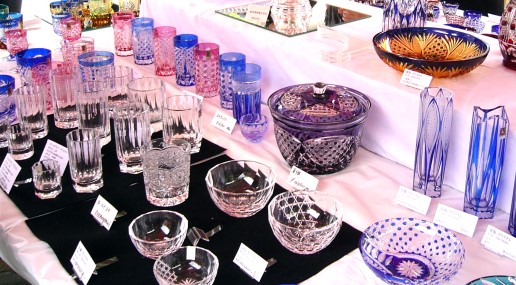
Beyond knives, Kappabashi is a treasure street for ceramics and tableware. Shops sell everything from rustic stoneware bowls and sake cups to restaurant-grade plates, donburi bowls, teapots, lacquerware and serving dishes — much of it the kind of well-made, everyday Japanese ware that's hard to find at home and surprisingly affordable here. Tableware is a brilliant gift: distinctly Japanese, useful, and available at every price point. The catch is fragility, which makes shipping and careful packing part of the decision (see below). Browse for shape and glaze you love rather than a 'set', and a few mismatched pieces often make the best, most personal haul.
Then there are the food samples — shokuhin sampuru (食品サンプル), the eerily realistic plastic models of ramen, sushi, parfaits and beer that sit in restaurant windows across Japan. Kappabashi is the place to buy them, and shrunk-down versions make wonderfully Tokyo souvenirs: fridge magnets, keyrings and phone stands shaped like a perfect bowl of ramen or a slice of cake. Some shops even run sample-making workshops where you craft your own — a memorable, very Tokyo activity, though spaces and languages vary, so book and verify in advance.

- Ceramics and tableware: bowls, sake cups, donburi, teapots, lacquerware and restaurant-grade plates — useful, distinctly Japanese gifts at every price.
- Plastic food samples (shokuhin sampuru 食品サンプル): mini ramen, sushi and parfait magnets and keyrings make standout souvenirs.
- Some shops run food-sample-making workshops — fun and very Tokyo, but book ahead and verify language and availability.
- Buy for the piece you love, not a matched set — a few well-chosen items beat a generic boxed set.

Getting there and pairing with Asakusa
Kappabashi sits between Ueno and Asakusa, which is its great practical advantage: it slots neatly into a day in old Tokyo. The nearest stations are around Tawaramachi (Tokyo Metro Ginza line) and Iriya (Hibiya line), and it's a walkable distance from Sensō-ji and the Asakusa core, so a classic plan is to see the temple and Nakamise in the morning, then walk over to Kappabashi for kitchenware before lunch — or reverse it and shop first while the shops are open, since many keep daytime business hours and some close on Sundays or irregular days. We don't list specific hours or closed-days here because they vary shop to shop and change; verify before a special trip.
Pairing Kappabashi with Asakusa also fixes the one weakness of a wholesale street: it can feel relentlessly practical. Bookended by Sensō-ji's gates, the Sumida River and Asakusa's old-town snacking, a kitchenware run becomes part of a richer day rather than an errand. If you've bought fragile ceramics or a knife, plan your route so the shopping comes near the end — you don't want to carry a box of plates around a temple complex all afternoon.

 Asakusa Neighborhood Guide
The old-Tokyo neighbourhood next door — Sensō-ji, Nakamise and the snacking that pairs perfectly with a Kappabashi run.
Sensō-ji Temple GuideTokyo's oldest temple, a short walk from Kappabashi — the obvious morning before an afternoon of kitchenware.
 Asakusa Old Tokyo Walk
A self-guided route through Asakusa's lanes that pairs naturally with a Kappabashi shopping stop.
Tax-free, shipping and how to shop respectfully
Two logistics make or break a Kappabashi haul. Tax-free: many shops offer it to foreign visitors on qualifying spends with a passport, but availability and thresholds vary by shop, so carry your passport, ask before you pay, and read our tax-free guide for how the scheme works (general goods and consumables follow different rules). Shipping: for fragile ceramics or a bulky order, some shops arrange international shipping — invaluable if you're early in a long trip or buying breakables — while others leave packing to you. Ask up front; if shipping isn't offered, factor careful wrapping and your luggage allowance into what you buy.
Finally, shop with the grain of the place. Kappabashi is a working wholesale street where staff serve trade buyers alongside visitors, so it rewards a respectful, purposeful approach: ask before photographing inside shops, don't handle delicate stock roughly, and be ready to buy rather than browsing endlessly at a busy counter. Treated that way, the specialists are generous with advice — and you'll leave with tools and tableware chosen well, not just grabbed. The volatile specifics (shop names, hours, closed-days, prices, tax-free thresholds and shipping terms) all change, so verify them on the day.
- Tax-free is common but varies by shop and threshold — carry your passport and ask before paying.
- Some shops ship internationally (a lifesaver for fragile ceramics); others don't, so ask up front and plan your packing.
- It's a working wholesale street: ask before photographing inside, handle stock gently, and shop with purpose.
- Verify hours and closed-days before a dedicated trip — many shops keep daytime business hours and some close Sundays.
Kappabashi at a glance
Use this card to plan a Kappabashi trip. The street's character — a wholesale kitchenware district of specialist shops between Ueno and Asakusa — is evergreen; the volatile details (shop names, hours, closed-days, prices, tax-free thresholds and shipping terms) change, so verify them on the day.
- Plan a half-day, decide your target before you go, and pair it with an old-Tokyo morning in Asakusa.
- Knives travel checked-only and need care advice; ceramics need careful packing or shipping.
- Tax-free and shipping vary by shop — carry your passport and ask before you buy.
- Verify hours, closed-days and shipping terms on the day; it's a working wholesale street, so shop respectfully.
Traditional Crafts in Tokyo
How to find Tokyo's traditional crafts — Edo kiriko cut glass, washi paper, indigo dyeing, hand-forged knives, woodwork and brushes — whether you want to buy a keepsake or make one yourself, organised by craft and by the neighbourhoods where the workshops cluster.
Read guide
Asakusa Neighborhood Guide
Asakusa is the heart of old Tokyo: the great Sensō-ji temple, the Kaminarimon thunder gate and the Nakamise souvenir lane, traditional snacks and crafts, rickshaws, the Sumida River and Skytree views across the water, and atmospheric ryokan-style stays — how to walk Edo-era Tokyo and where it connects.
Read guide
Best Souvenirs from Tokyo
What to buy in Tokyo and where to find it: food gifts and depachika sweets, stationery, crafts and kitchenware, character and pop-culture goods, beauty and skincare, tea and sake, plus airport-safe, packing and customs-smart choices — with links to the depachika, Kappabashi, department stores and craft shops behind each idea.
Read guideMore in Shopping
6
Akihabara Shopping Guide
Akihabara shopping for anime, electronics, games, PCs, tax-free stores, secondhand finds, and beginner routes — how to read Electric Town's multi-floor buildings and buy without getting overwhelmed.
Read guide
Don Quijote Tokyo Guide
How to use Don Quijote (ドン・キホーテ, 'Donki') in Tokyo: the famously crammed discount-chain experience, what it's brilliant and useless for, late-night and 24-hour convenience, tax-free counters, crowd timing, the MEGA Donki format, and what not to buy there.
Read guide
Ginza Shopping Guide
Ginza shopping for luxury, department stores, depachika, stationery, galleries, architecture, and tax-free basics — what to buy and which buildings and streets to aim for on Tokyo's grandest shopping district.
Read guide
Harajuku & Omotesandō Shopping
Shop Harajuku and Omotesandō for street fashion, kawaii goods, design, vintage, sneakers, and calm backstreets — the loud teen energy of Takeshita-dōri and the tree-lined design flagships of Omotesandō, plus where to escape the crowds.
Read guide
Nakano Broadway Shopping Guide
Shop Nakano Broadway for manga, figures, watches, vintage toys, Mandarake sections, prices to verify, and food breaks — the collector's counterpoint to Akihabara, all inside one famous retro mall.
Read guide
Shibuya Shopping Guide
Shibuya shopping for fashion, records, character goods, malls, gifts, tax-free stores, and station-area strategy — youth retail, music and pop goods packed around one of the world's busiest stations.
Read guide