

Tokyo Markets & Flea Markets
How to shop Tokyo's markets and flea markets (nomi-no-ichi 蚤の市): the temple- and shrine-grounds antique markets, what you'll find — kimono, ceramics, vintage, tools and craft — how they differ from the food markets like Tsukiji and Ameyoko, the all-important date-and-weather volatility, haggling and cash etiquette, and pairing markets with shrines and seasons.
Photo: DimiTalen / Wikimedia Commons · CC0
- ✓Tokyo's flea markets (nomi-no-ichi 蚤の市, or furī māketto フリーマーケット) are mostly held on temple and shrine grounds and in plazas on scheduled days — antiques, vintage kimono, ceramics, old tools, books and bric-a-brac.
- ✓They are the city's best hunting ground for affordable secondhand kimono and yukata, old ceramics, Shōwa-era curios and small craft pieces — the kind of characterful souvenir you won't find in a mall.
- ✓Crucially, almost all run on specific dates (often a set weekend or day of the month) and are weather-dependent, so confirming the next date — and that it's running — is the single most important planning step.
- ✓These differ from Tokyo's food markets: Tsukiji Outer Market and Ameyoko are everyday shopping streets, while the antique/flea markets are periodic events on shrine and temple grounds.
- ✓Bring cash and small change, go early for the best pickings, and expect gentle, polite bargaining at many antique stalls rather than fixed prices.
- ✓Markets pair beautifully with the shrine or temple that hosts them and with the season — an early-morning market and a quiet shrine make one of Tokyo's loveliest mornings.
Tokyo's flea-market culture
Tokyo's flea and antique markets are one of the city's most rewarding shopping experiences and one of its least mall-like. The Japanese terms to know are nomi-no-ichi (蚤の市, literally 'flea market') for the antique-leaning markets and the borrowed furī māketto (フリーマーケット, 'free market') for the more general car-boot-style sales. What unites them is setting and rhythm: many are held in the open air on the grounds of temples and shrines, or in city plazas, on scheduled dates rather than every day. Stalls spread out under the trees with antiques, vintage kimono, old ceramics, lacquer, tools, toys, books, jewellery and household curios — much of it Shōwa-era and earlier, and much of it affordable.
For a visitor, this is where Tokyo shopping turns personal. Instead of a polished new object from a chain, you find a single old tea bowl, a folded vintage yukata, a wooden printing block or a box of postcards with a history — the characterful, one-of-a-kind souvenir. Some of the long-running antique markets on shrine and temple grounds are well known to collectors; there are also regular flea markets in parks and plazas around the city, and seasonal craft and farmers' markets that overlap in spirit. We don't pin down today's exact line-up of which markets run where because schedules shift, but the type is consistent and easy to seek out once you know to look for it.

A few names worth knowing as types rather than promises: large recurring antique markets such as the Ōedo Antique Market, and the markets held at shrines like Tōgō-jinja, Hanazono-jinja and Nogi-jinja, are among Tokyo's better-known nomi-no-ichi. Because dates and venues change, treat any list as a starting point and confirm the next session before you build a day around it.


What you'll actually find
The pleasure of a Tokyo antique market is the sheer variety, but a few categories reward visitors especially. Vintage kimono and yukata are a highlight: secondhand markets are the most affordable way to buy real kimono, obi and yukata, often for a fraction of new prices, and they make beautiful, packable souvenirs (and surprisingly good wall or table textiles even if you never wear them). Old ceramics are another draw — tea bowls, sake cups, plates and pots in glazes you won't see at home — and small items like printing blocks, lacquer boxes, vintage toys, postcards, coins, costume jewellery and Shōwa-era household goods fill the rest of the stalls.
Set realistic expectations on condition and authenticity. This is secondhand and antique stock, so check pieces carefully for chips, stains and damage, and remember that 'antique' at a flea market is a broad term — buy what you love for its own sake rather than as a guaranteed investment. Prices are generally reasonable, and the thrill is the hunt and the find, not a bargain-basement guarantee. For textiles especially, inspect for moth holes and stains and ask if you can unfold a piece. We don't quote prices because they vary wildly by stall and item — judge each piece on the day.

- Best buys: vintage kimono, yukata and obi (far cheaper than new), old ceramics and tea bowls, lacquer, printing blocks, vintage toys and Shōwa-era curios.
- Characterful, packable, one-of-a-kind souvenirs you won't find in a mall.
- Inspect carefully: this is secondhand/antique stock — check for chips, stains and moth damage.
- Buy what you love for its own sake; 'antique' is broad and finds aren't guaranteed investments.

Map pins
Markets vs the food markets
It's worth separating the flea/antique markets from Tokyo's famous food markets, because visitors often conflate them. The food markets are everyday shopping streets, open most days: Tsukiji Outer Market is the lively lane of seafood, knives, tamagoyaki and street snacks beside the old fish-market site, and Ameyoko (Ameya-Yokochō) near Ueno is a bustling under-the-tracks bazaar of food, sweets, dried goods, cosmetics and cut-price miscellany. Neither is a periodic event — you can simply turn up — and both are about eating, grazing and everyday buys rather than hunting antiques.
The flea and antique markets, by contrast, are scheduled events on shrine and temple grounds and in plazas, focused on secondhand and antique goods. There's also a third strand — seasonal craft fairs, farmers' markets and design markets — which sit somewhere between the two: scheduled, often at a fixed venue, selling new artisan and food goods rather than antiques. Knowing which type you're after shapes your plan: for a meal and a buzzy walk any day, head to a food market; for a treasure hunt, time your visit to a flea-market date. Tsukiji in particular makes an easy add-on, since it's open most mornings and pairs with so much of central Tokyo.

- Food markets (Tsukiji Outer, Ameyoko) are everyday shopping streets — turn up most days for seafood, snacks and sundries.
- Flea/antique markets are scheduled events on shrine and temple grounds — time your visit to a date.
- Craft and farmers' markets are a third strand: scheduled, fixed-venue, selling new artisan and food goods.
- Know which you want: a meal and a walk (food market) vs a treasure hunt (flea market).

Dates, weather and how to confirm
Here is the single most important thing about Tokyo's flea markets: almost all of them run only on specific dates, and many are weather-dependent. A market might be held on a set weekend each month, on a particular day, or only in certain seasons — and an outdoor market on a temple forecourt can be cancelled or curtailed by rain. Turning up on the wrong day means finding an empty shrine, which is a real risk because the schedules genuinely vary market to market and change year to year. So the planning rule is absolute: before you build a morning around a flea market, confirm the next date, that the market is actually running, and the weather — and have an everyday food market or a shopping district as a fallback if it's washed out.
We deliberately don't print specific dates or a 'next session' here, because doing so would go stale and mislead. Instead, check the market's own current schedule close to your trip, and verify on the day for weather. This is the one area of Tokyo shopping where spontaneity fails you — the reward of a great antique market is real, but only if you've checked it's on. Treat the date as the first decision and everything else (which shrine, what to hunt for, how to pair it) flows from there.
- Most flea markets run only on specific dates — a set weekend or day — and many are weather-dependent.
- Confirm the next date, that it's running, and the forecast before building a morning around it.
- Schedules vary market to market and change yearly — never assume; verify close to your trip.
- Have a fallback (an everyday food market or a shopping district) in case of rain or cancellation.

Bargaining, cash and pairing with the shrine
A little market etiquette makes the morning smoother. Bring cash and plenty of small change — most stalls don't take cards, and you'll lose finds while hunting for an ATM. Go early: the best pieces sell first, and antique dealers and savvy locals arrive at opening. Gentle bargaining is part of antique-market culture in Japan, so at antique and bric-a-brac stalls it's usually fine to politely ask whether a price can come down a little, especially if you're buying more than one thing — but keep it courteous, accept a 'no' gracefully, and don't haggle hard over already-cheap items or at fixed-price craft stalls. Handle stock carefully, especially ceramics and textiles, and ask before photographing a stall.
Finally, lean into the setting. Because so many markets sit on shrine and temple grounds, a market morning naturally pairs with a visit to the shrine itself, and the whole thing is at its loveliest early, before the crowds, with the season showing in the trees overhead. Markets also tilt seasonal — spring and autumn weekends are prime — so a flea market can slot neatly into a cherry-blossom or autumn-foliage day. The combination of a quiet shrine, an open-air treasure hunt and a season in the trees is, for many, one of the most memorable mornings Tokyo offers. The volatile specifics — dates, venues, which markets run — change, so verify them before you go.

- Bring cash and small change — most stalls are cash-only; go early for the best pickings.
- Polite bargaining is fine at antique stalls (more so for multiple items); stay courteous and don't haggle at fixed-price craft stalls.
- Handle ceramics and textiles gently and ask before photographing a stall.
- Pair the market with its host shrine or temple, and time it to spring/autumn weekends for the loveliest mornings.

Tokyo markets at a glance
Use this card to plan a market morning. The type — scheduled, often weather-dependent antique/flea markets on shrine and temple grounds, distinct from everyday food markets — is evergreen; the volatile details (dates, venues, which markets run, prices) change, so verify them close to your trip and on the day.
- The golden rule: confirm the next date, that it's running and the weather before you go — markets are date- and weather-dependent.
- Bring cash and small change, arrive early, and bargain politely at antique stalls.
- Don't confuse them with the everyday food markets (Tsukiji Outer, Ameyoko), which are open most days.
- Pair with the host shrine and the season; verify all dates and venues close to your trip.

Tsukiji Outer Market Guide
What to eat at Tsukiji Outer Market, when to go, the nearest stations and manners — plus how the surviving outer-market lanes differ from the wholesale market and tuna auction that moved to Toyosu.
Read guide
Tokyo Events Guide
An evergreen guide to Tokyo's events by season: the great matsuri, summer fireworks, the Ryōgoku sumo tournaments, the Tokyo Marathon, winter illuminations, Comiket, Halloween and New Year — what each is, where it happens, and when to come.
Read guide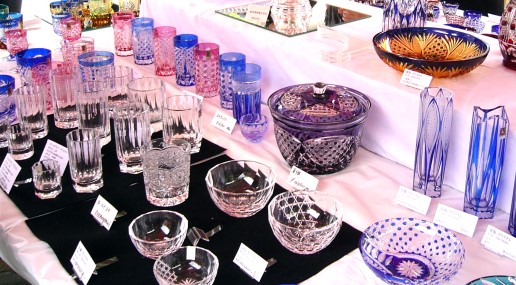
Traditional Crafts in Tokyo
How to find Tokyo's traditional crafts — Edo kiriko cut glass, washi paper, indigo dyeing, hand-forged knives, woodwork and brushes — whether you want to buy a keepsake or make one yourself, organised by craft and by the neighbourhoods where the workshops cluster.
Read guideMore in Shopping
6
Akihabara Shopping Guide
Akihabara shopping for anime, electronics, games, PCs, tax-free stores, secondhand finds, and beginner routes — how to read Electric Town's multi-floor buildings and buy without getting overwhelmed.
Read guide
Best Souvenirs from Tokyo
What to buy in Tokyo and where to find it: food gifts and depachika sweets, stationery, crafts and kitchenware, character and pop-culture goods, beauty and skincare, tea and sake, plus airport-safe, packing and customs-smart choices — with links to the depachika, Kappabashi, department stores and craft shops behind each idea.
Read guide
Don Quijote Tokyo Guide
How to use Don Quijote (ドン・キホーテ, 'Donki') in Tokyo: the famously crammed discount-chain experience, what it's brilliant and useless for, late-night and 24-hour convenience, tax-free counters, crowd timing, the MEGA Donki format, and what not to buy there.
Read guide
Ginza Shopping Guide
Ginza shopping for luxury, department stores, depachika, stationery, galleries, architecture, and tax-free basics — what to buy and which buildings and streets to aim for on Tokyo's grandest shopping district.
Read guide
Harajuku & Omotesandō Shopping
Shop Harajuku and Omotesandō for street fashion, kawaii goods, design, vintage, sneakers, and calm backstreets — the loud teen energy of Takeshita-dōri and the tree-lined design flagships of Omotesandō, plus where to escape the crowds.
Read guide
Kappabashi Kitchen Town Guide
How to shop Kappabashi Dōgugai (合羽橋道具街), Tokyo's wholesale kitchenware street near Asakusa: Japanese knives, ceramics and tableware, the famous plastic food samples (shokuhin sampuru), professional tools, plus access, knife-care, tax-free and shipping notes, and how to pair it with Sensō-ji.
Read guide